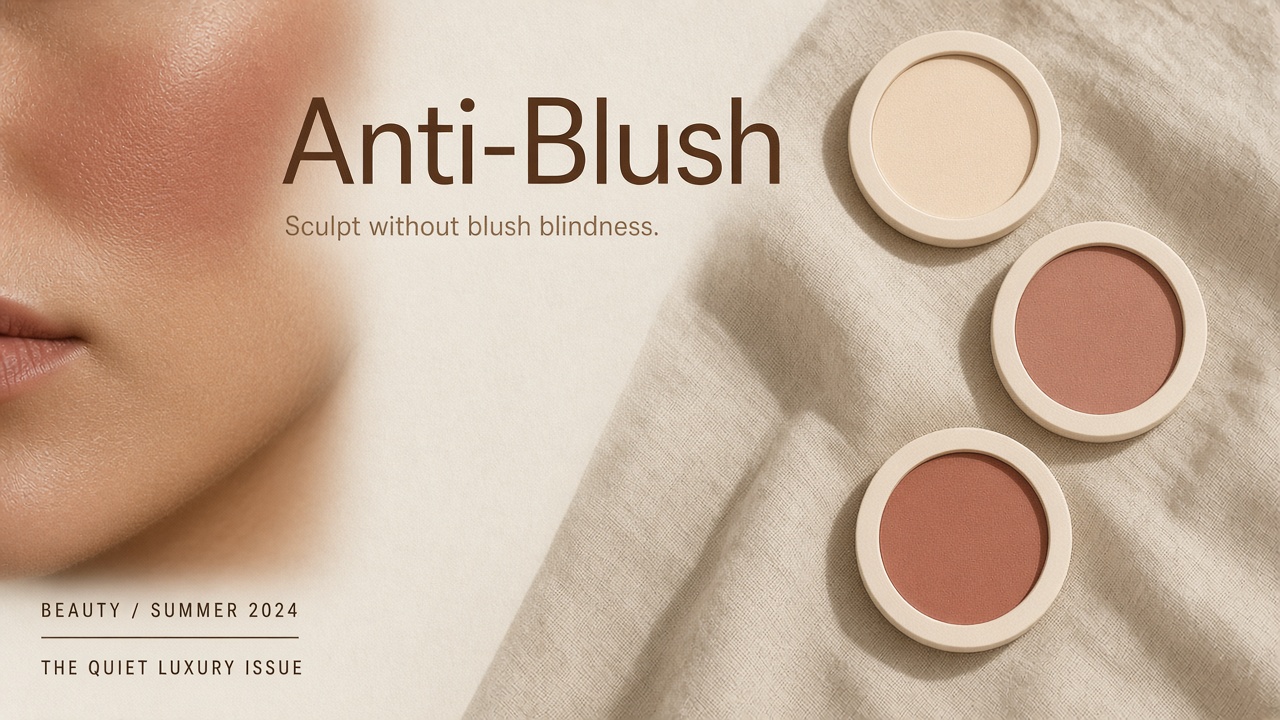
If your cheeks have been stuck on doll-pink autopilot, the internet has a quieter alternative. “Anti-blush” is the name beauty creators and editors are using for muted beige, taupe, rosy-brown, and terracotta shades that sit between classic blush and soft contour—enough dimension to look awake, not enough pigment to scream product.
According to Glossy, the phrase took off after LA creator Kim Senser’s July video calling MAC’s Skinfinish Colourstruck shade Film Noir Buff “the anti-blush.” That clip crossed two million TikTok views and a million on Instagram; within weeks, larger creators and titles from Vogue Adria to Harper’s Bazaar Singapore were covering neutral, muted blushes. As of Glossy’s mid-September reporting, Film Noir Buff was sold out at both Ulta and Sephora. Trend forecaster Spate’s September data, cited by Glossy, showed beige blush’s popularity across Google search and social platforms up 274.9% year over year.
Marie Claire frames the look as the next step after years of sculpted soft-glam: color that amplifies bone structure instead of painting on a new one. Makeup artist Theo Turner told the magazine that anti-blush “focuses on tones that add natural dimension to the face.” Makeup artist Ehlie Luna described it as a pushback against the doll-pink look that dominated feeds—“more subdued,” tonal rather than theatrical.
What anti-blush actually is (and isn’t)
Anti-blush is not going barefaced, and it is not full contour with a new nickname. It is cheek color in the neutral family: beige, taupe, dusty rosewood, soft terracotta, bronzey brown. The finish can be matte, satin, or lightly luminous; the intention is dimension that reads like skin under good lighting.
It also sits in a bigger blush boom. Glossy notes that Circana tracked double-digit gains for U.S. prestige blushes and bronzers in the first half of 2026, even as overall prestige makeup rose only about 3%. After seasons of saturated statement blush—think the Rhode and Rare Beauty era of high-chroma flush—muted tones are the corrective. Makeup artist Katie Jane Hughes told Glossy that neutral blush fits a slightly “beautifully tired,” ’90s-leaning mood already circulating on social, and that many people can approximate the look with bronzer plus a touch of nude lipstick from products they already own.
How to choose a shade by undertone and skin depth
Skip the “one viral pan for everyone” trap. Match the undertone of the anti-blush to your skin the way you would a foundation.
Fair / light, cool or neutral: Rosy taupe and soft mauve-browns keep the flush from turning orange. Marie Claire flags Yves Saint Laurent Make Me Blush in Hot Mauve as a fair-friendly rosy taupe that still looks like blood under skin.Light–medium, warm or olive: Beige-terracotta and warm mushroom tones. Cream formulas such as Chanel’s Lip and Cheek Balm in Vital Beige (a warm terracotta called out by Marie Claire) sheer out cleanly across a wide range.Medium–deep: Rosewood, cinnamon-brown, and muted brick. Powder options with a brown base—such as Dolce & Gabbana’s Playful Rosewood, recommended by Marie Claire for deeper tones—add structure without chalkiness.Deep / dark: Bronzey browns with a luminous finish read as flush, not ash. Marie Claire points to Morphe Cloudlight in Drift as a bronzey brown that can almost double as soft highlight on deep skin.
If a shade disappears completely, go one step deeper or warmer. If it looks like dirt or bruise, it is too cool or too gray—shift toward terracotta or rosewood.
Placement: apples vs. lift
Application technique barely changes; color and intent do. Marie Claire’s beauty writer Ariel Wilson notes two useful maps:
Classic apple placement for a natural flush—smile, tap on the round of the cheek, blend upward.Lifted bronzer-style placement for structure—start near the ear, sweep almost above the cheekbone, and leave space on the lower cheek for a softer transition shade if you want extra blend.
Build in sheer layers. Anti-blush fails when it becomes a muddy stripe; it works when the edges dissolve into skin and the center still shows a hint of warmth. Creams and balms suit dry skin and “no-makeup” days (Merit Flush Balm in Fox is Marie Claire’s dry-skin pick). Long-wear powders suit oily skin and humid days. Charlotte Tilbury’s Airbrush Flawless Finish Blush Blur in Pillow Talk Dreams is the magazine’s overall pick for a silky, buildable muted tone.
A five-minute at-home routine
Moisturize and apply a light base only where you need it—anti-blush looks better over skin than over heavy matte foundation.If you contour, keep it soft and one shade deeper than your skin; let anti-blush do the mid-tone work.Apply your muted blush with a dense brush or fingertips; tap, then blend with a clean fluffy brush.Optional: a second, slightly pinker or peachier transition blush lower on the cheek so the taupe does not sit alone.Skip heavy highlighter on the same plane, or use a pearl-infused blush (MAC Antique Velvet is Marie Claire’s luminous alternative now that Film Noir Buff is hard to find) and drop a separate highlighter.
Trend fatigue, credit, and shopping smart
Glossy also covers the messy part of virality: creators arguing over credit, MAC acknowledging Senser’s “anti-blush movement” in a statement while Film Noir Buff “overperformed launch plans by 4x,” and some shoppers already tired of yet another named look. The practical response is unglamorous and useful—shop the color family, not the hashtag. A drugstore bronzey blush, a nude lipstick on the cheeks, or a Hermès silky powder in a matte earth tone (Rose Feu is Marie Claire’s luxury callout for medium-to-deep skin) can all deliver the same idea.
Anti-blush sticks because it solves a real styling problem: you want cheeks that photograph with shape after a year of pink overload, without sliding into full contour cosplay. Pick a muted tone that matches your undertone, place it where you want lift, and stop before the pigment looks painted. That is the whole trend—less slogan, more soft sculpture.