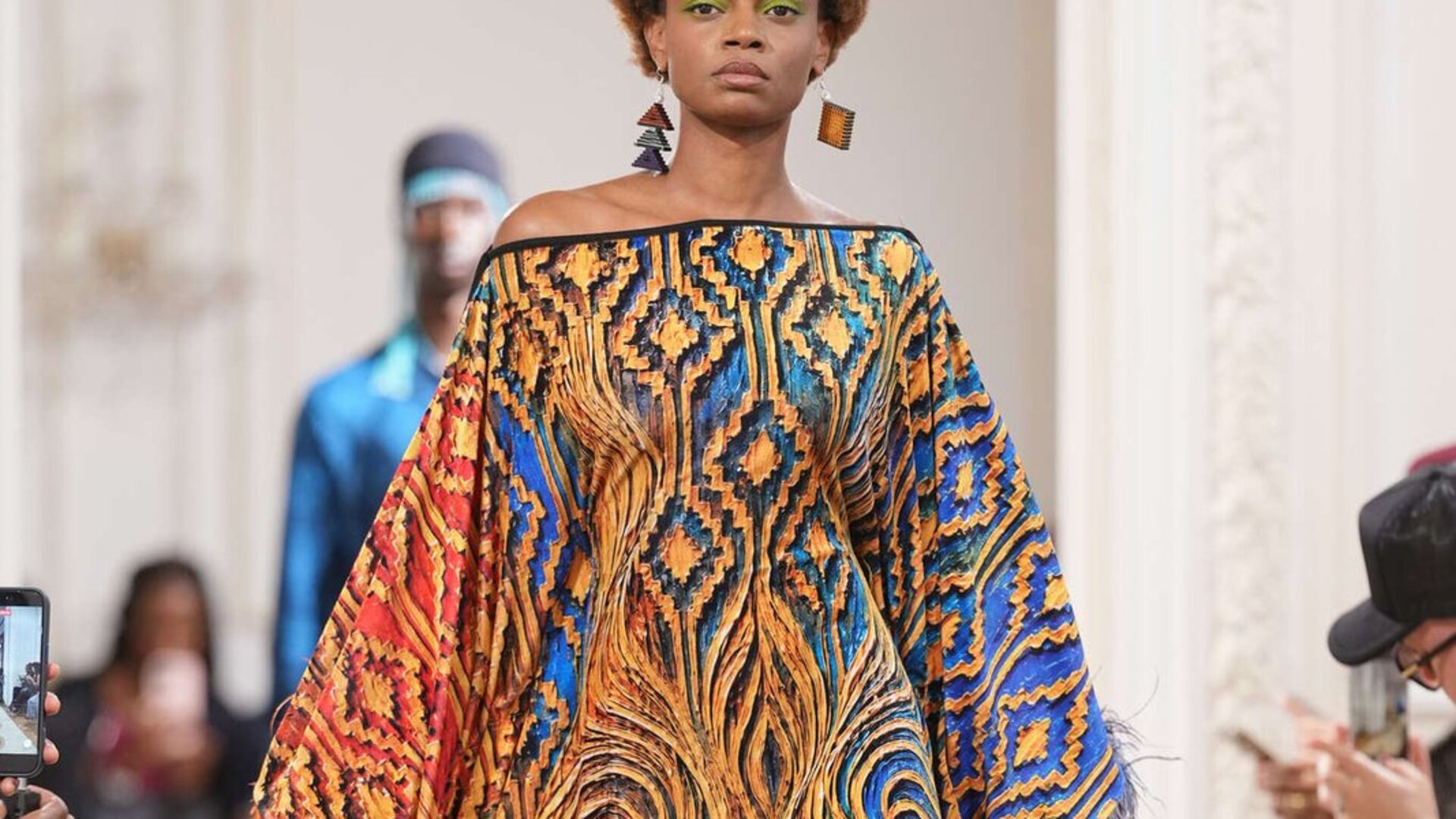
MaXhosa Africa did not need a borrowed European heritage slot to make the South African ambassador’s residence in Paris feel like a luxury house premiere. According to FashionNetwork, publishing Samuel Gut’s Paris Fashion Week open on 29 September 2026, Laduma Ngxokolo’s label staged its first official calendar runway on Monday, 28 September, under the title “Izihlwele Zivumile,” with guests welcomed by a solo from acclaimed artist Sjava. For Cover Issue’s runway desk, MaXhosa Africa SS27 Izihlwele Zivumile Paris is the clearest first-day continent-on-the-schedule story of the new IST evening: Xhosa geometry as luxury craft, not costume, without inventing private drama.
Izihlwele Zivumile — the ancestors have already approved
A Shaded View on Fashion’s Marie Podnos, writing from Paris on 28 September 2026, translates the collection title as “the crowds/ancestors have approved,” and frames the brief as rare confidence: the verdict arrives before the plea. FashionNetwork quotes Ngxokolo’s manifesto language as a “recognition of the identity we have carried from the very beginning.” Reuters, carried by Daily Maverick on 29 September 2026, places the show in the gilded rooms of the South African ambassador’s residence and reports Ngxokolo telling journalists he wanted to highlight South Africa’s diversity, beauty, and business successes. Cover Issue stays inside those attributed title and venue notes — no invented ancestral mythology beyond what the outlets printed.
First South African house on the official Paris runway
FashionNetwork and Daily Maverick/Reuters both stress the calendar milestone: MaXhosa Africa is the first South African brand to stage a full runway show on the official Paris Fashion Week schedule after seasons of presentations. Podnos notes five prior presentation seasons before the door opened. Ngxokolo, per Reuters, said he feels honoured after “fighting to sit at the table for 16 years,” and that the African continent remains underrepresented. FashionNetwork echoes the sixteen-year craft arc as the luxury positioning that made the baptism of fire land with authority. Cover Issue treats the first-official-runway fact as the news hinge of the piece.
Knit geometry, Courrèges-adjacent wool, and the procession of looks
FashionNetwork describes a procession following a banner with the brand emblem, moving through geometric patterns and colours emblematic of Xhosa culture: polo shirts with slim undulating collars paired with matching shorts or skirts; jumpers adorned with mesh diamonds; sculptural woollen dresses reminiscent of certain Courrèges pieces; shell headpieces; a glengarry-like Scottish cap with pompom; and a towering isicholo-akin headdress trimmed with cowries and bands of hide. Reuters adds brightly patterned bra tops with wavy hems, flowing midi skirts, lilac-and-grey geometric knit ensembles, and menswear from a blue-and-red double-breasted checkerboard knit suit covered in beaded symbols to baggy shorts and diamond-pattern polo shirts. Daily Maverick notes one look featuring multi-coloured knitted labels with African country names — a motif also worn by Sjava. Cover Issue keeps those silhouette lists attributed and does not invent SKUs.
Accessories, Cyrus Kabiru eyewear, and the aural brief
FashionNetwork flags accessories as equally striking: MXS-logo earrings with blue-and-copper pleated skirts or dresses; wooden hair clips spelling the acronym; woven handbags in white/brown/green/blue or black/white/brown; and fantastical spectacles layered in wood and metal — Cyclops eye or mad-scientist pairs. Reuters credits Kenyan artist Cyrus Kabiru for glasses created from waste on some looks. Both FashionNetwork and Reuters underline Sjava’s live soundtrack as the aural half of the immersion. Cover Issue does not invent collaboration contracts beyond those named credits.
Johannesburg factories, Eastern Cape wool, and pan-African intent
Reuters reports MaXhosa clothes are produced at two knitting factories the brand owns in Johannesburg and East London, Eastern Cape, where the wool for its knitwear is also sourced, with Ngxokolo aiming to boost South Africa’s textile industry and prove it can produce high-quality luxury goods. He told journalists the Africa he wants to showcase is one where the economy thrives and politics are less corrupt — quoted as aspiration, not Cover Issue editorialising. Podnos argues heritage here is author, not costume reference. Ngxokolo, per Reuters, also named Missoni, Gucci, and Louis Vuitton among inspirations alongside traditional Xhosa beadwork geometry. He had hoped to bring other African designers to Paris but lacked the resources for that wider convoy.
Look breakdown for buyers watching MaXhosa SS27
Steal the usable moves without flattening culture into print tourist kitsch. First: geometric knit polo-and-short or polo-and-skirt sets that photograph as sportswear luxury. Second: sculptural wool dresses with Courrèges-clean volume rather than fringe overload. Third: bra-top and wavy-hem midi pairings when the knit pattern already carries the story. Fourth: shell or cowrie headpieces as one strong accessory headline. Fifth: woven colour-blocked handbags instead of logo hardware noise. Sixth: statement eyewear — Kabiru waste-work or wood-metal fantasy — as the frame that finishes the walk. Related Cover Issue RUNWAY reading for neighbouring craft-forward Paris openers: Julie Kegels SS27 Apple of the Day at https://thecoverissue.com/julie-kegels-ss27-apple-of-the-day-paris — same calendar day cluster, different gravity brief.
What Cover Issue is not claiming
No invented quotes from Ngxokolo beyond Reuters and FashionNetwork attribution. No fabricated front-row feud. No unsourced sales figures. Stay with FashionNetwork’s Izihlwele Zivumile and accessory inventory, Daily Maverick/Reuters’ first-South-African-official-runway and factory notes, and A Shaded View’s ancestors-approved title reading.
Forward watch for luxury buyers
Buyers decoding MaXhosa Africa’s Paris baptism should track three commercial echoes: knit geometry that reads as maison craft rather than souvenir print, South African-owned factory capacity as a sustainability and provenance story, and soundtrack-plus-residence staging that still photographs as fashion first. Keep reading Cover Issue’s RUNWAY lane for sourced Paris closes; keep the craft credit where the outlets put it — with Laduma Ngxokolo, MaXhosa’s Johannesburg and East London ateliers, and the musicians and collaborators named on the night.