Marks & Spencer LFW SS27 is the sentence London did not expect to file under official Fashion Week drama—and that is exactly why it matters this weekend. On 18 September 2026, the British retailer staged its first London Fashion Week runway at the Design Museum, per TheIndustry.fashion, drawing on a century of clothing history while putting product on digital channels and ten flagship stores the same day. If your feed is already crowded with demi-couture whispers and heritage house returns, this is the counter-brief: archive intelligence, see-now-buy-now logistics, and a price ladder that keeps half the collection under £50.
Drapers places the debut inside a denser SS27 grid—47 shows and 23 presentations versus February’s 41 and 20—and notes M&S among the week’s structural newcomers alongside McQueen’s return and Mulberry under Christopher Kane. For readers shopping London in real time before Burberry closes Monday, Marks & Spencer LFW SS27 is the rare runway you can still wear Tuesday.
Marks & Spencer LFW SS27: what actually walked
Sophie Smith’s report for TheIndustry.fashion puts hard numbers on the cast of clothes: 41 womenswear looks and 16 menswear looks, designed by M&S’s UK-based teams. Models Jodie Kidd and Karen Elson walked; the presentation sat on the official schedule rather than as a side activation in Ibiza or at Silverstone—the consumer-facing formats the retailer had used more recently. Drapers adds front-row colour: Joan Collins, Ian Wright, and Pixie Geldof among attendees, with womenswear led by Maddy Evans and menswear by Mitch Hughes.
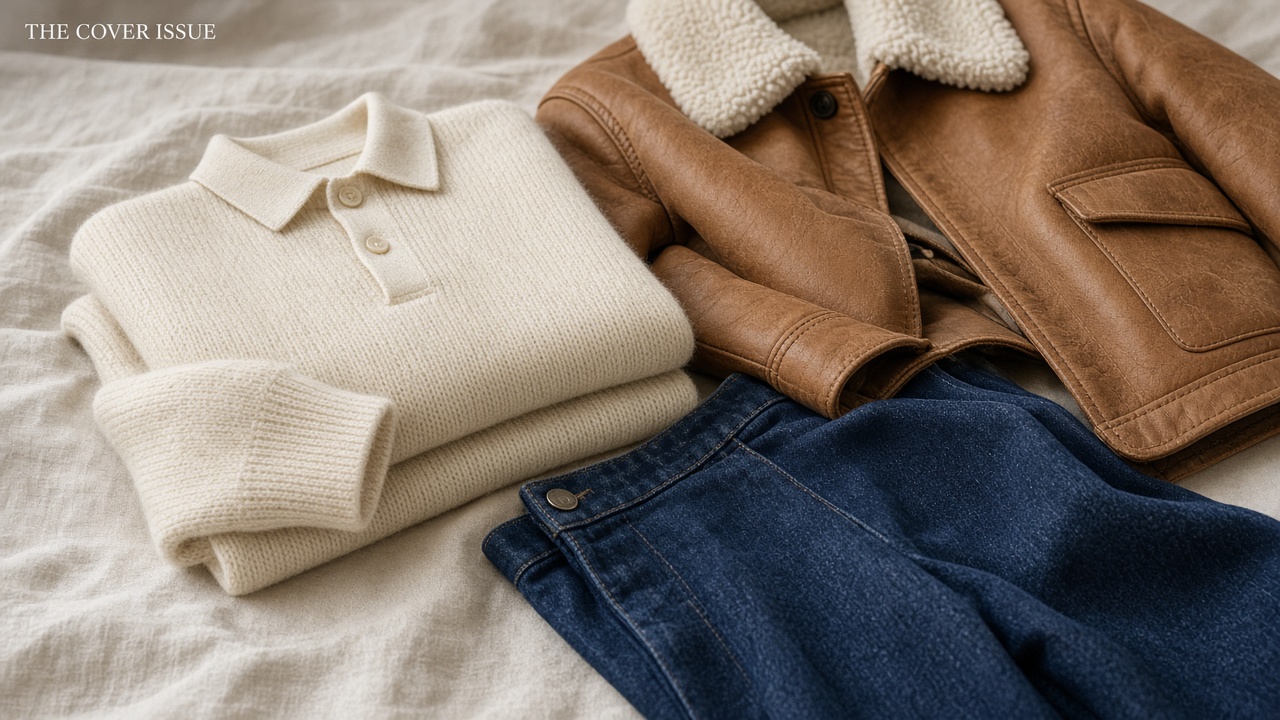
The conceptual engine was archival, not nostalgic cosplay. Designers researched the M&S Archive in Leeds—more than 72,000 historical items based at the University of Leeds, TheIndustry.fashion notes—studying silhouettes, materials, prints, and styling across decades, then re-cutting them in new fabrics and proportions. The 1960s twinset becomes modern knitted sets; wide-leg jeans pull from 1970s shapes; lingerie know-how feeds underwear-as-outerwear, camisoles, and lace bodies. A tan leather Borg jacket references a St Michael design. 1990s Christy Turlington campaign tailoring returns as a sharp black tuxedo with a crisp white shirt. Menswear leans 1980s velvet tailoring, a dry-wax car coat, Japanese selvedge denim, and heritage-check outerwear; a Per Una shearling jacket is reimagined from archive, and a bespoke floral motif on skirt and dress is built from two historic prints.
Chief Executive Stuart Machin, quoted by TheIndustry.fashion, framed the debut around M&S DNA: “fashion that is stylish but wearable, made with outstanding quality and always value for money.” That is not a couture thesis—and it is not trying to be. It is a high-street thesis wearing a Fashion Week badge.
See-now-buy-now: the retail mechanic
The commercial plot is as important as the archive moodboard. TheIndustry.fashion reports a see-now-buy-now model: product released through Marks & Spencer digital channels and ten flagship stores across the UK and Ireland immediately after the show, with a stream on M&S.com from 6pm. International reach runs through 46 M&S direct-to-consumer websites; in France, Germany, the Netherlands, and Poland, Zalando’s Live Hub hosts the presentation toward a potential audience of 22 million customers, building on the ZEOS fulfilment partnership.
1. Immediate availability. No six-month runway-to-rack lag for the featured drop.
2. Price clarity. Half the collection below £50, per TheIndustry.fashion—the accessibility claim you can test in-cart tonight.
3. Flagship plus DTC. Ten UK/Ireland flagships plus digital, then continental live-hub amplification.
4. Archive as product story. Twinsets, Borg leather, tuxedo tailoring, and floral reprints give merchandising language beyond “LFW exclusive.”
Why a supermarket fashion giant belongs on the LFW grid
Context numbers from TheIndustry.fashion explain the confidence: in FY26 M&S held a 10.2% fashion market share, saw style-perception scores rise five percentage points year on year, and grew under-35 customer numbers by 16%. One hundred sixteen UK-based designers work across womenswear, lingerie, menswear, kidswear, and home. Managing Director of Fashion, Home & Beauty John Lyttle called the show progress, “not an end point.”
Drapers’ week-so-far framing is useful here: H&M had already staged a high-street catwalk at Olympia before M&S’s Design Museum slot. The high street is not crashing Fashion Week; it is competing for the same cultural real estate—with cameras, models of record, and shoppable SKUs. Marks & Spencer LFW SS27 simply arrives with a century of St Michael receipts and a Leeds archive that independent labels would kill to borrow for a season.
What to pull if you are buying tonight
• Knit twinset 2.0 — modern gauge, 1960s logic; layer under a blazer for Monday meetings.
• Tan leather Borg jacket — the clearest archive flex; treat as the hero outer for transitional weather.
• Black tuxedo + white shirt — Turlington-era sharpness without costume drama.
• Wide-leg denim — 1970s proportion, contemporary wash; the under-£50 conversation starter if priced in that half.
• Lace body / camisole — lingerie-as-outerwear that still reads M&S-intimate rather than clubwear.
• Menswear velvet or dry-wax car coat — 1980s references that photograph well for social without requiring a full tailored suit.
How to read the show against the rest of LFW SS27
Harris Reed’s monochrome demi-couture and Mulberry’s Kane-era return own different emotional frequencies. Marks & Spencer LFW SS27 owns the democratic one: Design Museum architecture, century-long product archaeology, and a checkout button that works before the after-party ends. Drapers notes Burberry still closes the week on Monday; use Sunday night to shop the M&S drop while the stream is fresh and sizes are least picked-over.
For stylists and wholesale watchers, the lesson is less “high street copy” than “high street calendar literacy.” When a retailer with double-digit market share takes an official slot, the archive story must be specific enough to justify the lights—and M&S’s Leeds research trail, named model casting, and half-under-£50 promise are that specificity.
File notes for editors and buyers
• Date / venue: 18 September 2026, Design Museum, London (TheIndustry.fashion; Drapers).
• Looks: 57 total — 41 women’s, 16 men’s.
• Casting cues: Jodie Kidd, Karen Elson on the runway; Joan Collins, Ian Wright, Pixie Geldof front row per Drapers.
• Commercial: see-now-buy-now; ten flagships UK/Ireland; 46 DTC sites; Zalando Live Hub in four EU markets.
• Do not invent: no unsourced celebrity quotes; Machin and Lyttle lines only as reported by TheIndustry.fashion.
Marks & Spencer LFW SS27 will not replace London’s experimental designers—and it does not need to. It proves the official schedule can hold wearable archive fashion with a same-day cart, half the rack under £50, and enough Design Museum polish to make the high street feel like a destination again. Shop the twinset. Save the Borg. Leave the scandal inventing to someone else’s desk.